Specifically engineered to withstand coastal salt atmospheres and rapid aerodynamic lift pressures without altering flat roof concrete membranes.
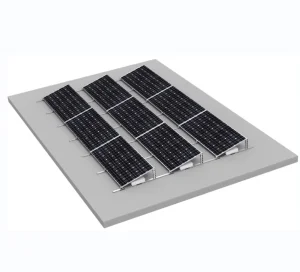
Customized aerodynamic profiling matching commercial concrete and EPDM roof assemblies in St. John's.
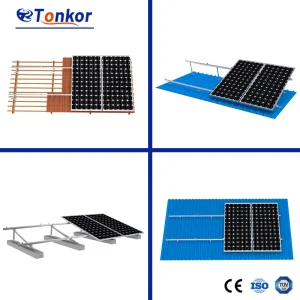
Corrosion-resistant hybrid components optimized for high-salinity coastal resorts and beachfront locations.
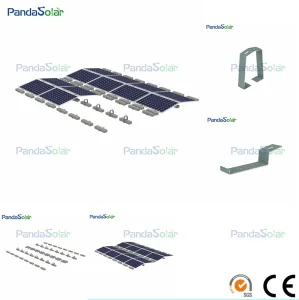
Rapid deployment brackets featuring simplified interlocking segments for minimal local labor times.
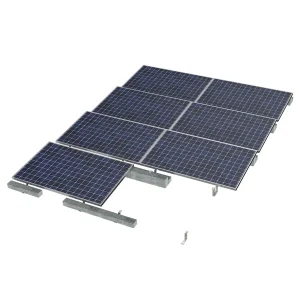
Heavy-duty modular frameworks engineered for bulk industrial installations and localized distribution grids.
As a prominent Small Island Developing State (SIDS) located in the Eastern Caribbean's Leeward Islands, Antigua and Barbuda faces a unique intersection of economic opportunities and severe environmental constraints. Historically reliant on imported diesel for power generation, local businesses and utility providers encounter some of the highest retail electricity rates in the Western Hemisphere—often exceeding $0.35 to $0.40 USD per kWh. In response, the twin-island nation has embarked on aggressive decarbonization pathways, aiming for 86% renewable energy transition by 2030, supported by the national *Grid-Interactive Solar PV Regulations*.
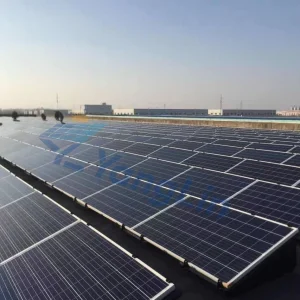
Flat concrete roofs are the structural standard for commercial buildings, resort complexes, governmental institutions, and desalinization infrastructure across St. John's, VC Bird International Airport corridor, and Jolly Harbour. Traditional penetrating mounting systems carry structural risks in this region, because drilling holes through roofing membranes exposes buildings to water intrusion during torrential downpours. Consequently, non-penetrating ballasted flat roof solar mounts have emerged as the industry's preferred racking technology, utilizing concrete blocks as anchoring mass to preserve the building’s envelope.
Deploying solar racking systems in this region requires engineering that accounts for severe weather. Antigua and Barbuda is positioned directly in the Atlantic Hurricane Belt, subject to extreme Category 5 hurricanes (e.g., Hurricane Irma) with sustained wind velocities reaching up to 290 km/h. High-velocity winds create aerodynamic uplift and sliding forces that can pull installations off flat roofs. Designing racking configurations for this market requires structural engineers to balance weight and aerodynamics, ensuring that the structures remain secure without exceeding the roof's load-bearing limits.
At Xiamen Illumino Solar Co., Ltd., we customize our ballasted mounting systems to meet the specific requirements of the Caribbean wind environment. Our systems feature engineered wind deflectors that redirect incoming airflow upward, converting horizontal wind forces into downward pressure to stabilize the array. This design significantly reduces the concrete ballast weight required for the system.
Our engineering team performs localized finite element analysis (FEA) based on the AS/NZS 1170.2:2011 (R2016) and ASCE 7-16 standards, using computational fluid dynamics (CFD) to analyze turbulence zones on flat roofs. We design our structures to account for edge zones, corner vortex effects, and parapet heights, providing installers in Antigua and Barbuda with site-specific engineering reports that specify ballast distribution requirements.
Additionally, we utilize high-grade EPDM cushions beneath our aluminum ballast bases. This prevents direct metal-to-concrete contact, protecting the roof surface from abrasion caused by thermal expansion and wind micro-vibrations, while also increasing the system's friction coefficient against sliding forces.
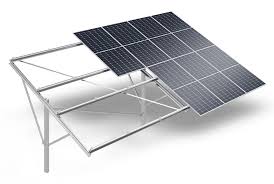
Operating from our modern manufacturing facility in the coastal hub of Xiamen, China, Xiamen Illumino Solar Co., Ltd. is a high-tech manufacturer specializing in solar racking and mounting solutions. Our facilities feature automated aluminum extrusion presses, precision anodizing lines, and CNC cutting complexes that maintain a steady production capacity of 500MW annually.
For Caribbean EPCs and developers, sourcing directly from our factory offers distinct advantages:
Our quality control processes monitor every phase of production, from raw billet selection to final packing. We back our aluminum flat roof ballasted structures with a 15-year factory warranty, providing long-term reliability for your solar assets in Antigua and Barbuda.
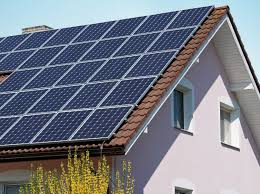
A comparative structural analysis between standard structural racking and Xiamen Illumino Solar specialized ballasted mounts.
| Feature | Xiamen Illumino Solar Ballasted Mounts | Standard Import Racking Structures |
|---|---|---|
| Primary Material | Anodized Aluminum AL6005-T5 & SUS304 Stainless Steel | Standard Galvanized Steel or low-grade Aluminum |
| Anodizing Coating Class | AA15 to AA25 (Designed for coastal marine environments) | Under AA10 (Porous, highly susceptible to salt spray pitting) |
| Wind Loading Threshold | Dynamic configurations engineered up to 75m/s (270km/h) | Typically certified up to 42m/s (150km/h) |
| Roof Waterproofing | Non-penetrating structure with EPDM protective layering | Required drilling with mechanical flashing or low-friction pads |
| Tilt Angle Configurations | Adjustable 5°, 10°, 15° options or customized designs | Fixed single-angle brackets with limited local flexibility |
| Warranty Coverage | 15-Year Factory Warranty with 25-Year Service Lifetime | Typically limited to 5-10 year material guarantees |
Explore our complete catalog of certified ballasted and non-penetrating solar structural solutions designed for global commercial and industrial applications.
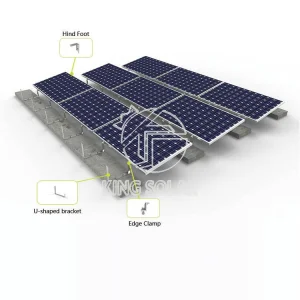
Wind deflector-enhanced system designed to withstand Category 5 wind loads in Caribbean environments.
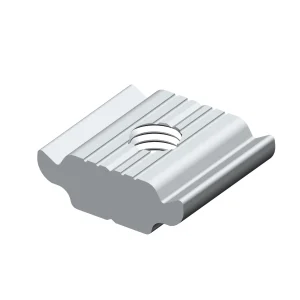
Lightweight AL6005-T5 structure designed for easy handling on-site and reduced structural dead weight.
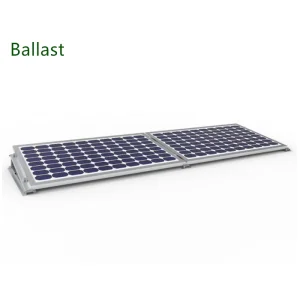
Pre-assembled triangular frame design that simplifies adjustments and reduces installation time.
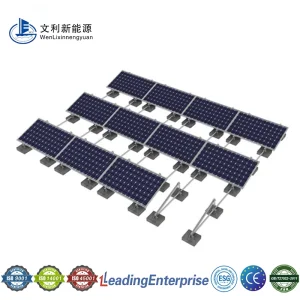
A rail-free design optimized for cost efficiency and lower shipping volume requirements.

Engineered for flat roof membranes, prioritizing structural water protection and leak prevention.
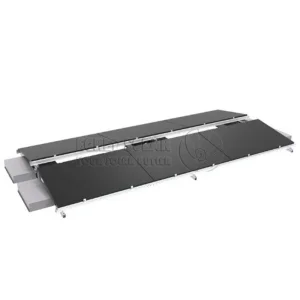
A heavy-duty mounting matrix configured for high-density, multi-row solar deployments on flat surfaces.
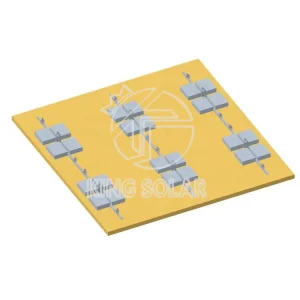
Designed with thick anodized layers to resist salt-spray corrosion in coastal resort zones.
A polymer-based ballasting option designed to withstand solar UV radiation and protect the underlying roof membrane.
Our flat roof ballasted solar mounting systems are designed to address the specific micro-climatic and architectural conditions of Antigua and Barbuda. We tailor our systems for a variety of project scenarios:
Resorts in Dickenson Bay, Jolly Harbour, and English Harbour often utilize flat concrete roofs for their guest rooms, utility facilities, and back-of-house areas. The oceanfront locations expose solar installations to salt-laden trade winds and high humidity, which can accelerate standard metal corrosion. Our ballasted systems combine AA25-grade anodized aluminum support structures with grade 304 and 316 stainless steel fasteners. This selection prevents galvanic corrosion and maintains structural integrity over the system's operational lifetime, avoiding staining or damage to resort roofs.
Logistics facilities, supermarkets, and agricultural hubs in St. John's rely on flat concrete or low-slope metal roofs. These commercial buildings often experience high air conditioning loads, making roof-mounted solar an effective solution for peak-shaving. Our non-penetrating ballasted mounts avoid the risk of roof leaks that could damage inventory, and they allow for maintenance and roof access without needing to dismantle the racking system.
Under Antigua and Barbuda's national climate resilience programs, schools, clinics, and government facilities are integrating solar systems to maintain backup power during grid outages. Our pre-assembled ballasted mounts enable quick on-site deployment, helping to reduce public infrastructure project timelines. The non-penetrating design also preserves roof warranties for public buildings.
Technical information regarding the design and deployment of flat roof ballasted mounting systems in high-wind regions.
 Illumino Solar