Comprehensive Technical Engineering Guide, Global Supply Chain Analytics, and High-Yield Utility PV Mounting Solutions for International Developers & EPC Contractors
Explore our CE-certified structural mounting systems engineered for utility-scale photovoltaic deployment, flat-roof commercial projects, and high-load industrial installations worldwide.
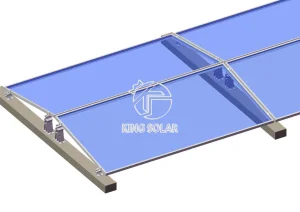
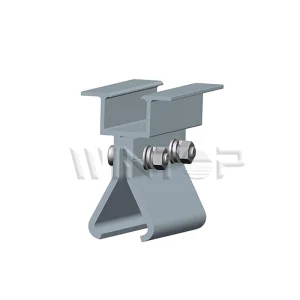
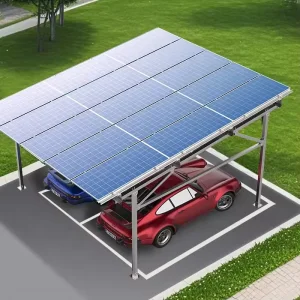
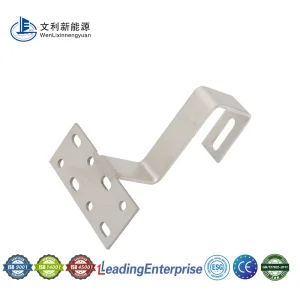
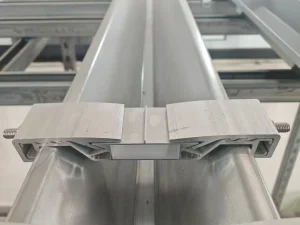
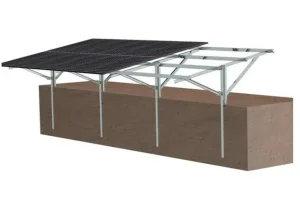
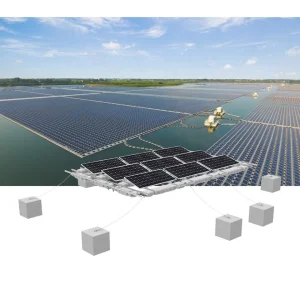
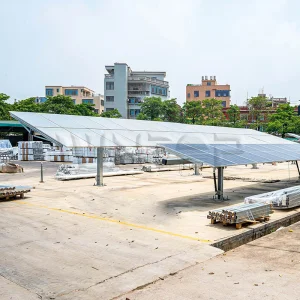
The global energy sector is witnessing an unprecedented shift toward multi-megawatt and gigawatt-scale solar installations. Utility-scale photovoltaic (PV) power systems have evolved from localized supplementary assets to central pillars of national electrical grids. Driven by stringent decarbonization mandates, corporate ESG commitments, and compelling Levelized Cost of Energy (LCOE) parity against fossil fuels, international procurement of CE certified solar utility-scale systems has reached multi-gigawatt volumes annually.
Deploying solar assets at utility scale demands structural integrity capable of surviving 25 to 30 years of unyielding environmental stress. Structural solar racking systems represent the mechanical backbone of every utility power plant. They must absorb dynamic wind loads, resist extreme thermal expansion cycles, withstand seismic acceleration, and mitigate severe atmospheric corrosion—all while optimizing panel tilt angles to maximize continuous irradiance yield.
As primary components within utility-scale capital expenditure (CAPEX), mounting structures directly dictate operational expenditure (OPEX) over the system's life cycle. Failure of structural components can cause widespread structural collapse, micro-cracking in high-efficiency N-type TOPCon or HJT modules, and complete project invalidation. Therefore, sourcing certified, precision-engineered racking systems from audited global tier-1 manufacturers is a critical risk mitigation strategy for Engineering, Procurement, and Construction (EPC) firms, Independent Power Producers (IPPs), and project financiers.
Compliance with European Union regulations and global structural standards is essential for project bankability and safety. CE certification for utility-scale solar mounting structures demonstrates strict adherence to the Construction Products Regulation (CPR EU No 305/2011) and relevant harmonized standards.
Mandatory certification for structural steel and aluminum components executed in Europe. Ensures factory production control (FPC), continuous weld audits, and trace-certified raw materials under Execution Class 2 (EXC2) or Execution Class 3 (EXC3).
Defines characteristic wind actions on solar structures based on local topographical roughness, gust responses, and dynamic structural oscillations validated via boundary layer wind tunnel testing.
Standard verification for wind actions applied across Oceania and high-cyclonic coastal zones, ensuring structural resistance under severe cyclical uplift forces.
Material formulations engineered for C3 to C5 corrosive environments, utilizing Hot-Dip Galvanization (HDG ≥ 85μm) or advanced Zinc-Aluminum-Magnesium (ZAM) self-healing steel coatings.
Selecting optimal alloys and anti-corrosive coatings requires balancing initial CAPEX, total weight, local environmental severity, and projected operational lifespans:
| Material / Coating System | Tensile Strength (MPa) | Corrosion Class (ISO 12944) | Self-Healing Properties | Optimal Application Scenario |
|---|---|---|---|---|
| Zinc-Aluminum-Magnesium (ZAM) | 350 - 550 MPa | C4 - C5 Severe Marine/Ind. | Yes (Edge & Scratch Protection) | Utility Ground Mounts, BIPV, High-Humid Coastal |
| Hot-Dip Galvanized Steel (HDG) | 235 - 400 MPa | C3 - C4 Industrial | No (Sacrificial Layer) | Standard Utility Ground-Mount, Inland Arrays |
| Anodized Aluminum (AL6005-T5) | 260 MPa | C3 Coastal / Roof | Passivation Film | Flat Roof Ballasted, Carports, Floating Solar Arrays |
| Stainless Steel (SUS304 / 316) | 500 - 700 MPa | C5 High Salt/Chemical | High Passivation | Fasteners, Clamps, Offshore Floating PV Interfaces |
China has consolidated its position as the world leader in solar photovoltaic hardware production, accounting for over 80% of global PV manufacturing capacity. This leadership stems from deep industrial cluster integration, advanced automated roll-forming technologies, raw material supply security, and unmatched operational efficiencies.
Within Xiamen’s advanced manufacturing ecosystem, companies leverage seamless access to high-grade steel mills, aluminum extrusion plants, precision hot-dip galvanizing facilities, and major international container ports. This proximity minimizes logistical friction, reduces lead times, and allows for rapid scalability during project acceleration phases.
High-speed production lines with integrated inline punching, custom profile forming, and laser cutting deliver sub-millimeter tolerances on C, U, and Z profiles for fast field assembly.
Continuous ultrasonic non-destructive testing (NDT), zinc thickness measurement, coating adhesion testing, and mechanical tensile validation at every stage of production.
Direct factory sourcing provides a 20% to 35% cost advantage over Western manufacturers without compromising raw material grade or international structural compliance certifications.
Xiamen Illumino Solar Co., Ltd. is a leading high-tech enterprise headquartered in the coastal manufacturing hub of Xiamen, China. Dedicated to research, engineering, manufacturing, sales, and comprehensive turnkey services, the company delivers market-leading clean energy mounting hardware across the globe.
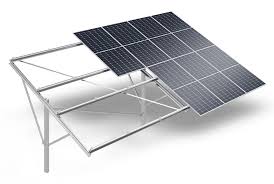
With a core focus on innovative engineering and stringent quality management, Xiamen Illumino Solar operates across three primary business pillars:
Our comprehensive product portfolio encompasses fixed-tilt ground systems, adjustable tilt mounting structures, standing seam roof clamps, ballast flat-roof systems, agricultural greenhouse mounting frames, balcony mounting kits, maritime floating solar floats, and Building-Integrated Photovoltaics (BIPV). Every product line undergoes rigorous testing to comply with international standards including CE, TUV, SGS material testing, AS/NZS 1170, and MCS certifications.
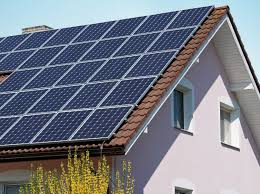
Xiamen Illumino Solar has built a solid global presence with established distribution networks across Europe, North America, Germany, Turkey, Brazil, Southeast Asia, and Australia. Adhering to standardized modular design principles, our products allow for simple warehousing, rapid site logistics, and straightforward onsite installation. Backed by automated production lines and robust supply chain management, our facility maintains an average annual production capacity of 500MW.
Quality assurance underpins every phase of our operations. Skilled quality controllers oversee all stages, from raw material procurement to final packaging. Operating our own modern manufacturing facilities, Xiamen Illumino Solar confidently provides a 15-year warranty on product structural quality, demonstrating our commitment to long-term reliability.
Driven by customer-centric values, our technical engineering team collaborates directly with project developers from initial engineering design to final system commissioning. We provide tailor-made engineering recommendations based on site-specific wind speeds, snow loads, soil bearing capacities, and shading factors to ensure long-term project success.
Deploying utility-scale solar arrays requires structural designs tailored to diverse environmental and geotechnical conditions. Mounting systems must be adaptable to varying terrain and local weather challenges:
In arid regions (e.g., Middle East, North Africa), intense UV radiation and extreme daily thermal swings cause material expansion stresses. Systems use ZAM-coated steel and heavy-duty RAM-post foundations driven deep into sandy or rocky soil to maintain structural stability.
High-latitude mountain deployments face severe static snow loads (>2.5 kN/m²). High-clearance, variable steep-tilt structural frames facilitate automated snow shed, preventing frame collapse and localized cell micro-cracking.
Land-scarce regions utilize floating mounting structures deployed on reservoirs, hydro-dams, and calm sea bays. Manufactured from food-grade HDPE floats with marine-grade AL6005-T5 and SUS316 fasteners to ensure corrosion resistance in salt-spray environments.
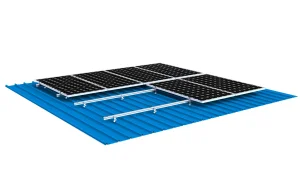
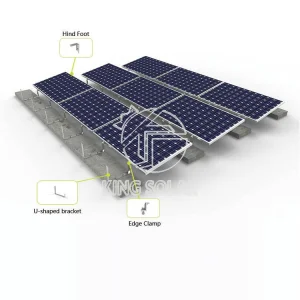
Urban industrial facilities combine roof waterproofing with power generation through non-penetrative standing seam clamps or ballasted non-penetrating arrays, preserving roof integrity while supporting clean energy generation.
International procurement managers and EPC buyers must navigate key technical, commercial, and regulatory criteria during global vendor evaluations. The following decision matrix offers a structured reference for utility-scale racking procurement:
| Evaluation Parameter | Technical Criterion | Risk Factor / Non-Compliance Impact | Xiamen Illumino Assurance |
|---|---|---|---|
| Structural Engineering Validation | FEA (Finite Element Analysis) & Wind Tunnel Testing | Wind-induced dynamic flutter, structural failure, loss of warranty coverage | Site-specific structural calculations stamped by licensed professional engineers (PE) |
| Certifications & Traceability | CE EN 1090-1, TUV Nord/SGS material certification | Customs delays, regulatory fines, project rejection by grid operators | Complete mill test certificates (MTC ISO 10204 3.1) and CE compliance documentation |
| Corrosion & Material Grade | HDG ≥85μm thickness or ZAM Z275/Z400 coating weights | Premature rusting, load-bearing failure within 10 years | Strict salt-spray chamber validation (>1500 hrs) with a 15-year factory warranty |
| Installation Efficiency | Pre-assembled components, standardized bolt sizes | High field labor costs, delayed commissioning schedules | Up to 40% pre-assembly in-factory for rapid snap-fit onsite installation |
As solar cell technology advances toward higher-efficiency bifacial N-Type TOPCon and Perovskite tandem modules, mounting structures are evolving to support these developments:
Modern single-axis trackers and fixed ground structures incorporate elevated clear-span torque tubes and narrow rail profiles to minimize rear-side shade, maximizing rear bifacial energy yield gains by 10% to 25%.
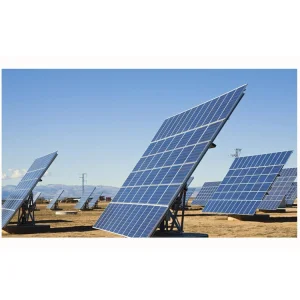
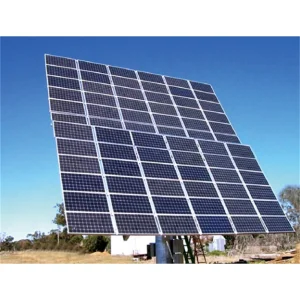
Integrating machine learning algorithms with real-time astronomical weather data allows dynamic single-axis and dual-axis trackers to auto-stow during high winds and optimize tilt angles during cloudy diffuse-light conditions.
To meet strict European Scope 3 carbon emission requirements, solar structural manufacturers are transitioning toward green-hydrogen refined steel and recycled low-carbon aluminum billets.
For European market entry, structural steel and aluminum solar mounting systems must comply with CE marking under EN 1090-1 (Execution Class EXC2 or EXC3) and EN 1090-2/3. Structural loading calculations must strictly follow Eurocode 1 (EN 1991-1-4 for wind actions and EN 1991-1-3 for snow actions). Xiamen Illumino Solar products fully comply with these EU regulatory standards.
ZAM steel offers superior corrosion protection compared to standard HDG coatings, especially in harsh coastal or high-ammonia environments. ZAM features a self-healing cut-edge property: when the steel is sheared or scratched, a protective zinc-hydroxychloride film forms over the exposed surface, preventing rust propagation without requiring manual touch-up paints.
Our utility-scale ground structures support various foundation types based on geotechnical reports, including ramming C/H steel posts, concrete strip footings, ground screw anchors, and bored concrete piers for uneven or rocky soils.
We provide a 15-year warranty on product quality and structural integrity across all certified aluminum and structural steel mounting systems, supported by an estimated 25-to-30-year operational design lifecycle.
Yes. Our structural engineering team performs custom finite element analysis (FEA) and static calculations to customize profile thickness, steel yield strengths (e.g., Q355B/Q420B), and connection hardware to withstand hurricane-force wind speeds up to 65 m/s and high snow loads up to 1.6 kN/m².
Our BIPV systems feature continuous structural drainage channels made from Zinc-Aluminum-Magnesium steel combined with EPDM weather-sealing gaskets. This design channels rainwater away without relying on chemical sealants, providing long-term waterproofing for industrial roofs.
Thanks to our annual 500MW production capacity and automated roll-forming equipment, standard manufacturing lead time for a 50MW project ranges from 3 to 4 weeks following design approval and raw material staging.
We provide pre-bid technical support including preliminary structural layout drawings, bill of materials (BOM) optimization, wind tunnel load simulation data, foundation quantity estimations, and budgetary pricing models to help secure project bids.
Discover our high-efficiency single/dual axis solar trackers, specialized roof mounting kits, and heavy-duty structural mounting systems.
 Illumino Solar