Top 10 Solar Mounting Foundations for Soft or Sandy Soil?

Time:2026-10-29 Author:Charlotte
0%

Soft and sandy soils can make solar foundations look deceptively simple. A post may install quickly, yet still struggle with uplift, lateral loads, or shifting ground. The surface tells only part of the story. Soil density, groundwater, frost depth, slope, and array height all influence foundation performance. Small details matter, such as loose sand around a pile or water collecting beside a footing. They can change the design.

Which solar mounting foundation is best for soft or sandy soil depends on site conditions and project loads. This guide compares ten common options, including helical piles, driven steel posts, ground screws, concrete piers, and ballast systems. Each has trade-offs in installation speed, equipment needs, cost, and resistance to movement. None is a universal fix. A geotechnical assessment and checks for pullout and lateral capacity help narrow the choices. Local testing can reveal surprises.

A foundation that works on one sandy site may fail to suit another. That is easy to overlook. The comparisons ahead are a practical starting point, not a substitute for engineering review. They also consider access for machinery, corrosion exposure, and whether the ground can be disturbed during installation. Some assumptions may not hold once excavation begins. Real sites are messier than diagrams. That deserves a second look.
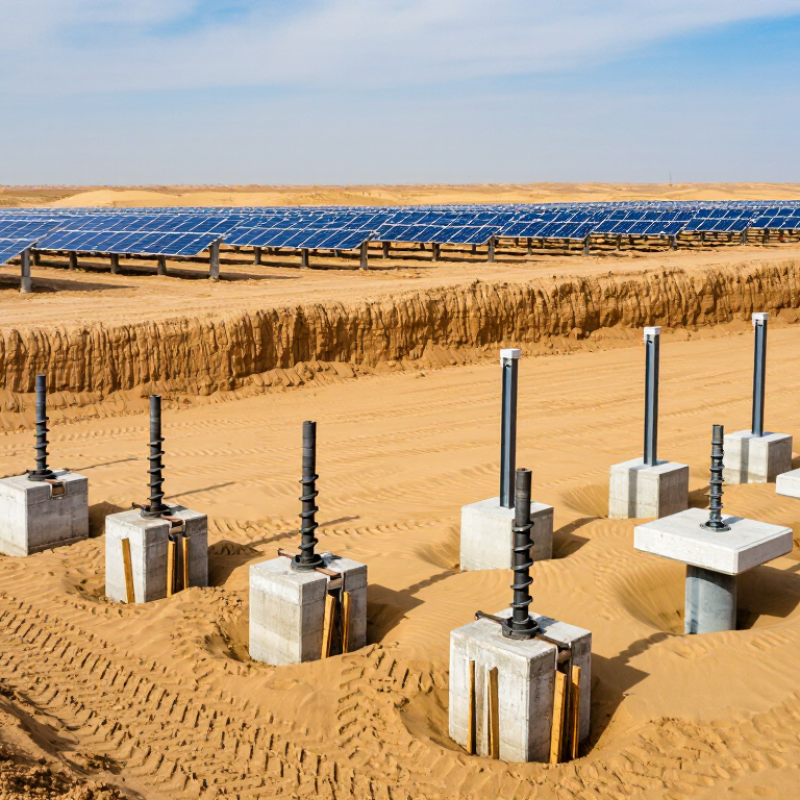
Top 10 Solar Mounting Foundations for Soft or Sandy Soil?

How Soft and Sandy Soils Affect Solar Foundation Design

Soft or sandy soil can make a solar foundation behave very differently from one installed in dense, well-drained ground. Loose sand may shift under repeated wind loads, while soft clay can compress slowly beneath the array. A post that feels firm during installation may still settle after wet seasons. That matters. Uneven movement can twist racking, stress connections, and alter panel alignment.

Foundation design should start with site-specific soil investigation, not a generic depth rule. Test pits, borings, or penetration tests can help reveal weak layers, groundwater, and changes across the project area. In loose sand, engineers may assess deeper driven piles or helical piles for resistance below the surface. In soft soils, larger bearing areas or deeper support may reduce settlement, but added depth is not automatically better. Groundwater, buried debris, and installation access can change the practical choice. Small details count.

Designers also need to consider lateral loads from wind and the soil’s response to repeated loading. Saturated sand can lose stability during intense shaking, while rain runoff may erode soil around exposed supports. Drainage, erosion protection, and construction sequencing deserve attention alongside foundation capacity. Field observations during installation should be compared with the soil report; unexpected refusal or unusually easy penetration may signal a mismatch. Soil models are useful, but they are still models. A qualified geotechnical and structural review helps turn test data into a foundation suited to the actual site.

Top 10 Solar Mounting Foundations for Soft or Sandy Soil

How soft and sandy soils affect solar foundation design

Screening scores are qualitative comparisons, not measured field-performance data or design recommendations. Soft soils can increase settlement and lateral-movement concerns; loose sands may require checks for pullout, scour, and liquefaction. Confirm soil conditions and foundation capacity with a site-specific geotechnical investigation and structural design.

Key Site and Load Factors for Selecting a Foundation

Soft or sandy soil can vary sharply across a single solar array. A dry surface may hide loose fill, a perched water table, or a softer layer below. Looks can mislead. A geotechnical investigation should establish soil layers, groundwater depth, density, and seasonal changes. One test point rarely represents an entire site. Add investigation points where grades, drainage, or soil color change.

Foundation selection must match both structural loads and ground response. Ask the structural engineer for support reactions, including dead load, snow, and wind uplift. Assess axial capacity, pullout resistance, and lateral movement, not just bearing pressure. In loose sand, uplift or lateral demand may govern before compression does. Driven piles, helical piles, ground screws, or engineered shallow systems may work, but none is universal. Installation refusal, torque readings, and proof tests can reveal conditions that desk calculations missed.

Also consider slope, erosion, drainage, frost depth where relevant, corrosion exposure, access, and equipment limits. A foundation that installs easily may still perform poorly after repeated wetting or strong gusts. I would not choose from soil labels alone; that shortcut is tempting, but incomplete. Confirm assumptions with site-specific testing and qualified geotechnical and structural review. Define acceptance criteria before installation.

Top 10 Solar Mounting Foundations for Soft or Sandy Soil? - Key Site and Load Factors for Selecting a Foundation

Foundation options are not a universal ranking. Suitability depends on site investigation, structural loads, installation access, groundwater, and the depth and properties of competent soil.

Foundation type Potentially suitable site conditions Key load and design factors Advantages Limitations and checks
1. Helical piles (screw piles) Loose to medium-dense sand or soft soils where piles can reach a suitable bearing layer; useful where low-vibration installation is preferred. Check installation torque, axial compression and uplift capacity, lateral resistance, pile-group effects, and the required embedment. Can be installed with relatively little excavation and may be loaded soon after installation; torque provides an installation record. Capacity must be correlated to local soil conditions and verified by suitable testing. Cobbles, obstructions, very dense layers, or highly variable soils can hinder installation. Assess corrosion and long-term durability.
2. Driven steel solar posts or sections Suitable for many utility-scale arrays in sand or soft ground when a deeper competent layer is accessible and driving conditions are practical. Evaluate compression, wind-induced uplift, lateral loads, bending, embedment, driving stresses, and the effects of pile spacing. Fast installation with limited spoil; the driven member can provide direct support for the mounting structure. Driving resistance does not by itself prove design capacity. Trial driving and load testing may be needed. Vibration, noise, refusal, alignment, and corrosion protection require attention.
3. Driven steel pipe piles Loose or saturated sandy deposits where support can be developed at depth; may be considered where larger pile sections are needed. Check axial and lateral capacity, uplift resistance, buckling where relevant, pile toe conditions, and installation effects on nearby structures. Can penetrate soft surface layers and transfer loads to deeper soils; steel sections can be adapted to different structural demands. Driving may cause vibration and noise. Open-ended piles can collect soil or water; assess plugging, drivability, corrosion, and any required internal or external protection.
4. Driven steel H-piles Potential option for deep, variable soil profiles where piles must pass through weaker layers to reach a stronger stratum. Assess axial capacity, uplift, lateral bending, slenderness, connection details, and the behavior of the pile in each soil layer. The relatively small cross-section can help with penetration through some soils and obstructions compared with larger displacement piles. Capacity and drivability are site-specific. Check driving stresses, corrosion allowance, buckling in unsupported zones, vibration, and the feasibility of achieving the design depth.
5. Precast prestressed concrete piles May suit sites requiring deep support through soft or loose surface soils, provided transport and pile-driving access are available. Consider axial and lateral actions, uplift connections, pile length, handling stresses, driving stresses, and the condition of splices. Factory-produced piles can offer consistent dimensions and quality; they can be driven to deeper bearing layers. Heavy equipment and transport are required. Driving can generate vibration, and pile damage or difficult splicing must be managed. Confirm suitability for the site's exposure and soil chemistry.
6. Continuous flight auger (CFA) piles Often considered in soft cohesive soils and some silty or sandy profiles where the installation method can maintain bore stability. Check axial and lateral capacity, settlement, reinforcement and connection details, pile continuity, and concrete placement requirements. Installation can reduce vibration compared with driven piles and can be useful where noise or vibration is restricted. Loose, water-bearing sand may require careful construction controls to prevent ground loss or defects. Concrete delivery, auger withdrawal, reinforcement placement, and quality records are critical.
7. Drilled shafts with casing or slurry support Can be considered in loose or saturated sand when the excavation can be stabilized and a suitable bearing zone is reachable. Design for axial, lateral, and uplift loads; evaluate shaft diameter and depth, settlement, base resistance, and structural connection to the racking. Allows relatively large foundation elements and can avoid pile-driving vibration. Uncased holes may collapse in loose saturated sand. Casing or drilling fluid, groundwater control, concrete placement, and inspection of the shaft and base need specialist planning.
8. Micropiles Useful for restricted-access areas, retrofit work, or sites where small drilling equipment is advantageous; can extend through weak soil to a stronger layer. Check axial and lateral capacity, grout-to-ground bond, reinforcement, uplift resistance, group effects, and connection design. Small equipment and limited work areas can make installation practical where larger piling rigs cannot operate. Typically requires specialist installation and quality control. Capacity depends on the ground-grout bond and construction method; costs may be higher than simpler systems.
9. Ground improvement with shallow footings or pads May be viable where loose sand or soft ground can be improved to a verified depth. Methods differ by soil: vibrocompaction is generally suited to clean granular soils, while other methods may be needed for cohesive soils. Verify improved ground properties, footing bearing pressure, total and differential settlement, groundwater conditions, and wind-uplift anchorage. Can make shallow foundations feasible and may improve a wider area rather than treating each support point separately. Effectiveness depends strongly on soil type, fines content, groundwater, treatment depth, and access. Require a ground-improvement design and post-treatment verification; improvement does not automatically eliminate settlement risk.
10. Ballasted shallow foundations Consider only where a site-specific assessment confirms adequate bearing and settlement performance; more commonly suited to firm ground than very soft or loose sand. Check bearing pressure, sliding, overturning, differential settlement, wind uplift, drainage, and the stability of the supporting surface. Can avoid deep excavation or driven piles and may be practical where ground penetration is restricted. Added weight can increase settlement on soft soils and may not provide reliable resistance in loose or saturated ground. Confirm ballast stability under design wind loads and prevent erosion or undermining.

Ten Solar Mounting Foundation Types for Weak or Sandy Ground

Soft or sandy ground needs more than a quick look at the surface. A site investigation should check soil layers, groundwater, and resistance to uplift and sideways loads. Ten possible foundation types are driven steel piles, helical piles, ground screws, micropiles, and drilled shafts with casing. Driven piles can reach denser layers, but installation may disturb nearby ground. Helical piles use plates to develop resistance; their capacity depends on the soil, not just installation depth. Ground screws suit some lighter structures, though loose sand can limit their holding power. Micropiles and cased shafts can reach deeper, stronger material. They may cost more. No option fits every site.

Other choices include ballast foundations, precast concrete blocks, geosynthetic-reinforced shallow pads, screw anchors with tiebacks, and pile-and-grade-beam hybrids. Ballast and blocks are easier to remove, but their weight can settle into soft soil. Reinforced pads spread loads across a wider area; they still need checks for sliding and uneven settlement. Tiebacks can help resist pullout, while hybrid systems connect piles with beams to share loads. A neat drawing can still be wrong. Small variations in sand density matter. Compare designs using measured soil data and construction checks, then confirm that the chosen system can handle the project’s loads and drainage conditions.

Installation and Ground-Preparation Methods for Each Foundation Type

Soft or sandy soil needs careful preparation before any solar foundation is installed. Helical piles are screwed into tested, firm layers; driven posts are pressed or hammered to the specified depth. Ground screws need a pilot check for loose pockets. Concrete piers require excavated holes, temporary casing where sand sloughs, and controlled backfilling. Spread footings and precast pads need stripped topsoil and a compacted, level base. Small details matter.

Ballast trays spread loads across a wider area, but the prepared pad must resist settlement and erosion. Screw anchors with tiebacks need verified pull-out capacity and secure connections. Micropiles are drilled and grouted where deeper support is needed. Geocell-reinforced pads confine compacted aggregate; they can help limit rutting, but do not replace soil testing. For each option, check groundwater, buried services, drainage, and uplift loads before installation. Sandy soil can look firm on top and still shift below.

Tips: Compact in thin lifts, not one deep layer. Keep runoff away from the array. Record installation depth and torque where applicable. If test results vary across the site, pause and reassess the layout; assuming uniform soil is an easy mistake. A qualified geotechnical professional can help confirm bearing and pull-out assumptions.

How to Compare Foundation Options for Different Site Conditions

Compare foundations by what the soil can resist, not by a broad “soft soil” label. Loose, dry sand may allow driven piles to install quickly, but weak lateral resistance can affect their design. Saturated sand behaves differently. A geotechnical investigation should identify soil layers, groundwater, density, and corrosion risks. Cone penetration or standard penetration data can help estimate capacity. Where results remain uncertain, test installations and pull tests provide useful evidence. They take time.

Helical piles can suit sites where crews need controlled installation and measurable torque, but buried debris or dense layers may stop them. Ground screws face similar limits. Concrete piers can reach firmer soil below a weak surface layer, though excavation, groundwater, and spoil removal add effort. Ballasted foundations avoid deep penetration, but their weight requires adequate bearing capacity. Not always practical.

Compare more than purchase price. Check uplift and lateral loads, settlement risk, access for equipment, installation speed, and inspection needs. A sandy pad that looks firm underfoot may still shift after heavy rain. One easy mistake is treating a small test area as proof for the entire site. Soil can change over a short distance. Use site-specific investigation and installation checks before choosing a system.

FAQS

Why can soft or sandy soil affect solar foundations?

Loose sand may shift under repeated wind loads. Soft clay can compress slowly beneath an array. A post may feel firm at installation, then settle after wet seasons. Uneven movement can twist racking and stress connections.

What soil investigation should guide foundation design?

Start with site-specific testing, not a generic depth rule. Test pits, borings, and penetration tests can reveal weak layers, groundwater, and soil changes. It is tempting to trust a tidy soil model too much.

Is a deeper foundation always better?

No. Deeper support may help reach stronger layers, but groundwater, buried debris, and access matter. Added depth alone does not guarantee stability.

Which foundation options may work in loose sand or soft soil?

Engineers may assess deeper driven or helical piles in loose sand. Soft soil may call for wider bearing areas or deeper support. Test results guide the choice; there is no universal pick.

What installation steps help prevent problems?

Use temporary casing where sand falls into excavations. Strip topsoil and compact level bases for pads. Compact aggregate in thin lifts. Small details matter.

How can erosion and movement be reduced around an array?

Keep runoff away from supports and protect exposed soil from erosion. Ballast trays spread loads across a wider prepared pad, but that pad can still settle.

What should crews check during installation?

Compare field conditions with the soil report. Unexpected refusal or unusually easy penetration may signal a mismatch. Pause and reassess; assuming uniform soil is an easy mistake.

Which site conditions should be checked before work begins?

Check groundwater, buried services, drainage, and uplift loads. Saturated sand can lose stability during intense shaking. Rain runoff may erode soil around exposed supports.

When might geocells or micropiles be considered?

Geocells confine compacted aggregate and may limit rutting, but they do not replace soil testing. Micropiles can provide deeper support where needed.

Conclusion

This article explains how soft or sandy soils can affect the stability, load capacity, and installation of solar mounting foundations. It outlines the key factors to assess before choosing a system, including soil strength, groundwater, wind and uplift forces, slope, and site access. It then compares ten foundation types suited to weaker ground, such as driven and helical piles, ground screws, ballast systems, and other reinforced or hybrid solutions, describing how each may perform under different conditions.

The guide also reviews practical ground-preparation and installation methods, from soil testing and compaction to pile-depth adjustments and erosion control. Rather than presenting one option as suitable for every project, it offers a framework for comparing cost, constructability, durability, and structural performance. The central question, “Which solar mounting foundation is best for soft or sandy soil,” is answered by considering the specific site conditions and engineering requirements before selecting a foundation.

Charlotte

Charlotte

Charlotte is a seasoned marketing professional with a deep understanding of the company's portfolio and a passion for elevating its presence in the market. With a keen eye for detail and a commitment to excellence, she ensures that our professional blog is regularly updated with insightful articles......