As the severity and frequency of hurricanes increase, the resilience of infrastructure is critical. This raises a crucial question: can solar carports withstand hurricane-force wind speeds? According to a report by the National Renewable Energy Laboratory, wind forces exerted by hurricanes can exceed 155 miles per hour. Solar carports, designed to support both vehicles and solar panels, require thorough evaluation to ensure their durability in harsh conditions.
Experts like Dr. Emily Matthews, a structural engineer specializing in renewable energy systems, assert that "proper engineering can enhance the survivability of solar installations amidst storm events." Her research indicates that with the correct design principles, solar carports can be fortified against extreme winds.
While advancements in materials and design have improved sustainability, not all solar carports are alike. Some may fail under strenuous tests, highlighting the need for industry standards and rigorous testing. The variation in construction could lead to vulnerabilities that require closer examination. Thus, it remains vital to address whether solar carports can truly withstand hurricane-force winds in an era of climate uncertainty.
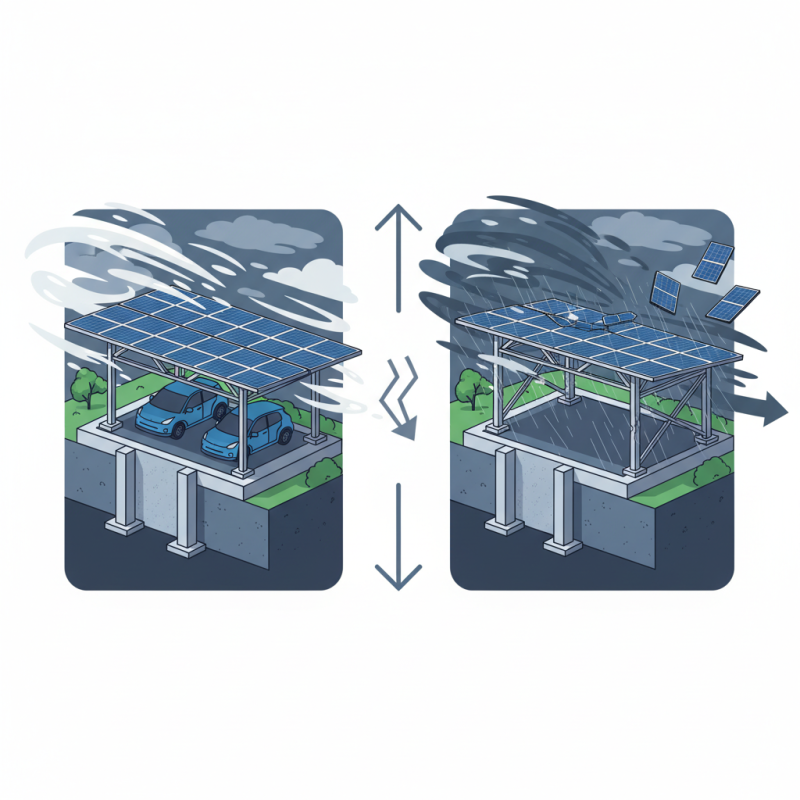
Solar carports represent a unique fusion of renewable energy generation and functional architecture. At their core, these structures serve to protect vehicles while harnessing sunlight for energy. The design of solar carports varies, but they generally feature a durable frame, often made from steel or aluminum. This selection of materials is critical for resilience against natural elements, including high winds and heavy storms.
When assessing their ability to withstand hurricane winds, engineers often focus on wind load calculations. Properly designed solar carports can endure significant forces. Yet, not all carports are created equal. Some designs may lack reinforcement, making them vulnerable during extreme weather. Consequently, understanding the specific structural components is vital. Features like reinforced joints and low-profile designs may enhance stability.
Moreover, the environment in which a solar carport is built influences its durability. Locations prone to storms may require stricter building codes and more robust designs. Engaging with professionals experienced in structural engineering can help identify the best approach. A well-executed solar carport could offer both energy benefits and protection. However, ongoing evaluations and refinements are necessary as climates change.
This chart illustrates the maximum wind speeds that different solar carport models can withstand. Each model has been tested for durability, showcasing their structural integrity against hurricane winds.
Designing solar carports to withstand hurricane winds requires careful planning. Engineers consider materials and structural integrity. The design must focus on strong anchoring systems. They often use reinforced aluminum or steel for durability. Lightweight materials can be advantageous but may not hold up under severe weather.
Hurricane winds can exceed 100 mph. This intensity can cause damage if the carports are not designed properly. Aerodynamic shapes can reduce wind resistance. However, innovations must also consider the potential for debris. Designers often face the challenge of balancing aesthetics and functionality.
Regular testing and simulations are crucial. Some designs may look promising but fail under pressure. Continuous refinement based on real-world data is necessary. It's a reminder that resilience isn't just about robust materials. It’s about understanding nature’s complexities and adapting accordingly.
The resilience of solar carports against hurricanes relies heavily on the materials used in their construction. Strong, durable materials are essential. Steel and aluminum are common choices. These metals can withstand high wind speeds and resist corrosion from harsh environmental elements. Composite materials are also becoming popular due to their lightweight nature and strength.
Another important factor is the anchoring system. Solar carports need robust foundations to endure storm forces. Engineers often use deep-set concrete piers or helical anchors. These solutions provide stability and help prevent uplift during severe weather. Even with careful planning, not all designs guarantee safety.
Some solar carports have faced issues during storms, leading to damage. It shows the need for continuous improvement in design and material choice. Regular assessments of carport structures are crucial for ensuring they meet current weather standards. Even the best materials require proper installation and maintenance. Being proactive helps address vulnerabilities before they become serious problems.
Hurricane-prone areas face unique challenges. Solar carports, designed to provide shade and energy, must withstand fierce winds and heavy rainfall. Recent case studies shed light on this critical issue, showcasing the resilience and vulnerabilities of solar carports in these regions.
In Florida, several solar carports were tested during hurricane events. Some survived intact, while others suffered damage. Key factors include structural design and material choices. Strong anchoring systems proved essential in preventing uplift and collapse. An interesting observation was the impact of local building codes, which often dictate the strength of installations. However, some carports did not meet these standards, leading to regrets and calls for stricter regulations.
In Texas, a different scenario unfolded. Innovative designs helped certain solar carports endure storm surges and high winds. Yet, not all municipalities have embraced these advancements. This inconsistency raises questions about best practices. Stakeholders must collaborate to share knowledge and develop better guidelines. Investing in research can lead to improvements. Understanding failures is equally important as celebrating success stories. This ongoing dialogue will enhance the safety and reliability of solar carports in hurricane zones.
| Location | Wind Speed (mph) | Maximum Storm Rating | Carport Damage Status | Post-Storm Inspection Result |
|---|---|---|---|---|
| Miami, FL | 120 | Category 4 | Minor Damage | Structurally Sound |
| New Orleans, LA | 130 | Category 4 | Severe Damage | Under Repair |
| Charleston, SC | 110 | Category 3 | Minimal Damage | Operational |
| Galveston, TX | 150 | Category 5 | Total Loss | Demolished |
| Tampa, FL | 140 | Category 4 | Moderate Damage | Needs Assessment |
| Key West, FL | 115 | Category 3 | No Damage | Fully Functional |
Innovations in solar carport engineering are crucial as extreme weather events become more frequent. Recent data from the National Oceanic and Atmospheric Administration (NOAA) indicates that hurricanes have intensified over the last few decades. Structures like solar carports face unique challenges during such storms. Engineers must develop designs that can withstand hurricane winds, which can exceed 150 mph.
One innovation is the use of advanced materials. Composite materials are being explored for their lightweight yet strong characteristics. These materials could enhance durability while reducing the overall weight of the carport. Additionally, anchoring systems are also evolving. Ground-mounted anchors are designed to keep the structure stable under severe wind loads. However, studies indicate that some designs still lack adequate testing for extreme gusts.
Moreover, real-time weather monitoring systems integrated into solar carports can provide valuable data. These systems can track storm conditions and automatically deploy protective measures. This is still a developing area, with limited solutions on the market. Some experts question whether current models are sufficiently robust for the most severe events. The goal remains to create a resilient solar carport that can generate power even in harsh conditions.
: Steel and aluminum are common because they withstand high winds and resist corrosion. Composite materials also show promise.
Robust foundations, like deep-set concrete piers, ensure stability and prevent uplift during storms. They are crucial for safety.
Aerodynamic shapes reduce wind resistance, which can help prevent damage during high winds. A balance between aesthetics and functionality is needed.
Real-time weather monitoring helps track storm conditions. This data can lead to better protective measures and upgrades.
No, some designs have failed during storms despite careful planning. Continuous assessment and improvement are essential.
Engineers must balance innovative design with nature's unpredictability. Some solutions may lack sufficient testing against extreme weather.
Regular assessments are necessary to meet current weather standards and address potential vulnerabilities before they escalate.
While they offer benefits, lightweight materials may not endure severe weather. It’s a trade-off designers must consider.
Advanced materials and improved anchoring systems are crucial. Current designs need to be robust enough for extreme weather.
Engineers should continuously use real-world data for refinement. Practical testing is key to ensuring long-lasting performance.
The article "Can Solar Carports Survive Hurricane Winds and Storms?" explores the structural integrity and resilience of solar carports in the face of extreme weather conditions. It begins by explaining the design and components of solar carports, highlighting how their structure can be adapted to withstand hurricane-force wind speeds. The impact of hurricane winds is discussed in detail, emphasizing the importance of innovative engineering and material selection for storm resilience.
Furthermore, the article presents several case studies of solar carports located in hurricane-prone areas, showcasing their performance during actual storms. It concludes by exploring future innovations in solar carport engineering that aim to enhance their durability in extreme weather scenarios. Overall, the discussion raises a critical question: can solar carports withstand hurricane-force wind speeds? The implications of these structures are significant for sustainable energy solutions in vulnerable regions.

Illumino Solar