What Height Clearance Is Needed for Ground Mount Solar?

Time:2026-11-26 Author:Charlotte
0%

Ground-mounted solar panels need enough clearance to work safely and suit the land beneath them. The right height is not one fixed number. It depends on the racking system, site conditions, equipment access, and how the space will be used. What are the height clearance requirements for ground mount solar? The practical answer starts with the lowest point of the array, not the panel’s top edge.

A site assessment should account for snow depth, seasonal vegetation, drainage, and the tools or vehicles needed for maintenance. For example, a mower may pass beneath a low array, while a small tractor needs more room. Livestock grazing or crops may call for a different layout altogether. Plan for real conditions. Also check manufacturer specifications and applicable local requirements before setting foundation heights. These can vary by location and project type.

Clearance affects more than convenience. Too little space can make inspections, cleaning, and vegetation control difficult. Raising the structure may improve access, but it can also increase material needs and wind exposure. That trade-off deserves careful review. Measure the ground across the full array area, since slopes and uneven soil can leave some panel edges lower than expected. A qualified solar designer or installer can evaluate these details alongside structural and drainage needs. This guide explains the factors that shape ground-mount clearance and the questions to resolve before installation. Even a careful estimate can miss a site-specific detail. That is worth checking early.
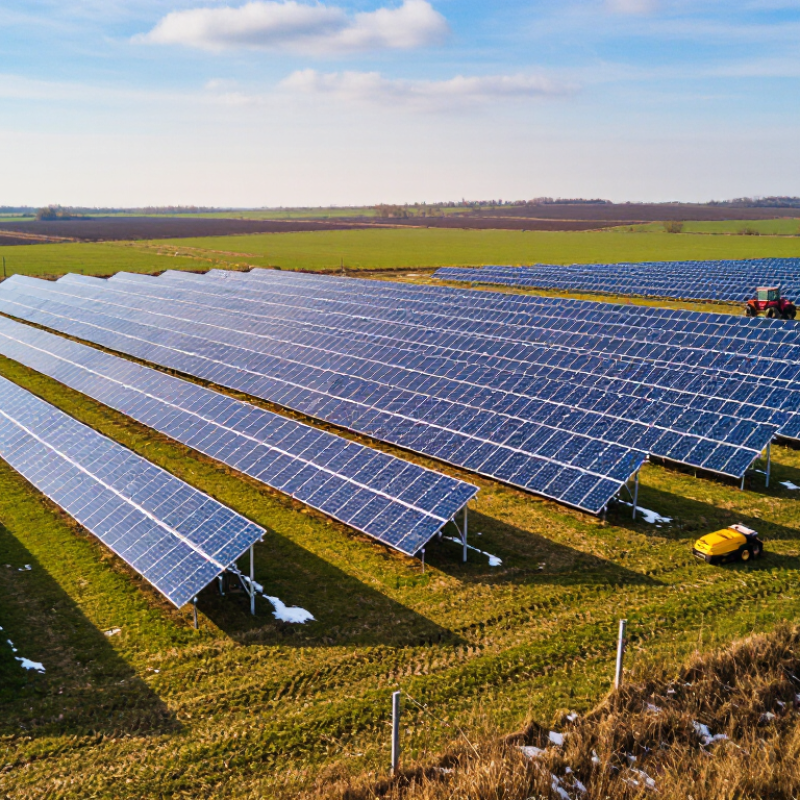
What Height Clearance Is Needed for Ground Mount Solar?

What Ground-Mount Solar Height Clearance Means

Ground-mount solar height clearance is the vertical space between the finished ground and the array’s lowest point. That point may be a panel edge, rail, or support component, depending on the rack’s slope and tilt. It is not the height of the entire structure. Small distinction. Picture a mower passing beneath the lower edge, or rainwater moving through grass after a storm. Measure from the actual grade under the array, not from a level spot several feet away. On sloping ground, clearance can change noticeably along one row.

This space affects access, vegetation control, and how the array handles seasonal conditions. In snowy areas, designers may allow room for expected snow buildup; on uneven sites, they need to check the lowest point carefully. Too little clearance can make mowing or maintenance awkward. More height may require taller posts and a careful review of structural loads. There is no single suitable measurement for every property. I would not rely on a generic number without checking the terrain and intended use. Plans should state the clearance at the lowest point and reference the finished grade, so installers and owners are measuring the same thing.

Which Site and System Factors Affect Required Clearance

Ground-mount solar clearance depends on what must pass beneath the panels and what the site experiences. Measure from finished ground level to the modules’ lowest edge, not just to the support frame. A small gap may work on a dry, level lawn but become a problem where grass grows quickly or soil shifts after rain. There is no universal height.

Consider the tallest equipment that needs access. A mower, small tractor, or maintenance cart may need more room than a person walking through. Check panel tilt, too: the lower edge can sit much closer to the ground than the back of the array. On sloped land, measure at several points. One corner may have comfortable clearance while another nearly touches the grade.

Snow changes that. In snowy areas, allow space for expected accumulation and drifting, and check whether falling snow could block access. Drainage matters as well; runoff from panels can form muddy channels or expose support posts. Livestock, vegetation, and planned maintenance can also affect the target height. It is easy to overestimate what a site needs from a clean plan. I would verify clearances on the ground with the intended equipment, then have a qualified installer or engineer check structural loads, terrain, and local requirements before fixing the design.

What Height Clearance Is Needed for Ground-Mount Solar?

How panel tilt affects the lower-edge clearance when the upper edge is held at 2.5 m

Illustrative geometry, not a required design standard: assuming a 2.0 m panel dimension along the slope, level ground, and a fixed 2.5 m upper-edge height, lower-edge clearance is calculated as 2.5 m − (2.0 m × sin(tilt angle)). Actual clearance should account for site slope, expected snow depth, vegetation management, access needs, and system design. Local codes and project requirements may also apply.

How Clearance Needs Differ Across Mounting Designs

Ground-mount clearance means the vertical distance from the soil to the lowest panel edge. The right height depends on the mounting design and what must pass beneath it. A conventional fixed-tilt array can sit relatively low when the land is used only for energy production. That reduces wind exposure and steel costs, but leaves little room for mowing equipment or grazing animals. Check clearance at the panel’s lowest edge, not just at the support post.

Elevated agrivoltaic rows need more room for crops, people, and machinery. DIN SPEC 91434:2021 sets a minimum lower-edge height of 2.1 metres for elevated systems; its vertical-system category uses 0.8 metres. These are design thresholds, not guarantees that a tractor will fit. NREL’s agrivoltaics research also stresses matching system layout to agricultural operations. Trackers add another wrinkle: panels move, so clearance must be checked across their full range of motion. Snow, uneven ground, and future equipment changes matter too. That detail is easy to miss. A measured clearance that works today may prove awkward after the farm changes.

What Height Clearance Is Needed for Ground Mount Solar? — How Clearance Needs Differ Across Mounting Designs

Mounting design Typical clearance range* Where this design is commonly used Key clearance considerations
Low-profile fixed-tilt rack About 0.3–0.6 m (1–2 ft) Sites with limited vegetation, modest snow accumulation, or a preference for a lower profile Leaves less room beneath the modules for mowing, inspection, and snow shedding. Confirm that the lowest edge will remain clear of the finished ground surface.
Standard fixed-tilt rack About 0.6–1.2 m (2–4 ft) Many conventional ground-mounted residential and commercial arrays Provides practical ground access and some space for vegetation management. The required height depends on module size, tilt angle, terrain, and local snow conditions.
Single-axis tracker Often about 0.6–1.5 m (2–5 ft) at the lowest point Large ground-mounted systems where modules rotate to follow the sun Clearance changes as the tracker rotates. Check the minimum clearance across the full rotation range, including any required stow position and uneven ground.
Elevated or agrivoltaic structure Commonly about 2.1–4.0 m (7–13 ft) or more Projects designed to allow farming, livestock, equipment movement, or other activities beneath the array Set the height according to the tallest equipment, access route, crop plan, or livestock needs. Taller structures generally require additional structural and wind-load review.
Bifacial array with elevated modules Often about 0.9–1.8 m (3–6 ft) Sites using bifacial modules where rear-side access to reflected light is part of the design Ground reflectivity, row spacing, and module height affect rear-side light exposure. Higher clearance alone does not guarantee a particular energy gain.

Important: These are general planning ranges, not code requirements or engineering specifications. Clearance means the vertical distance from finished grade to the lowest module edge, measured at the relevant operating position. Final dimensions should account for snow, flooding, drainage, slope, vegetation, maintenance access, and local requirements.

How to Determine a Suitable Panel-to-Ground Height

A suitable panel-to-ground height depends on what the array must clear, not on one universal number. Measure the lowest panel edge after choosing its tilt, since that edge often sets practical clearance. Check the site for typical snow depth, seasonal grass growth, surface water, and nearby equipment. A row above short grass may need less clearance than one over a snowy or frequently flooded area.

Walk the proposed layout after rain if possible. Look for puddles, soft soil, and places where runoff naturally travels. Then allow enough room to mow, inspect wiring, and reach the structure without crouching beneath sharp edges. A few extra inches can make routine work easier. But raising panels too far can increase wind exposure and structural demands, so the support design should be reviewed by a qualified solar professional.

Measure at several points, especially on uneven ground. The slope may change the lowest clearance more than expected. Leave room for future vegetation, too; plants rarely stay as tidy as the site plan suggests. It is tempting to choose the tallest mounting height for easy access, but that is not always the safest or most economical choice. Match the clearance to local conditions and the system’s structural requirements.

How to Verify Access, Weather, and Code Requirements

Ground-mounted solar has no single clearance that fits every site. Measure the lowest panel edge, tracker movement, equipment doors, and vehicle routes—not just the highest point. Where adopted locally, the 2021 International Fire Code, Section 503.2.1, specifies 13 feet 6 inches of vertical clearance for fire apparatus access roads. That figure applies to the road, not automatically to the solar array. Confirm local amendments and fire-department access needs with the authority having jurisdiction.

Weather can change usable clearance. NOAA’s 1991–2020 U.S. Climate Normals provide local snowfall data; use it to assess snow depth, drifting, and where plowed piles may accumulate. ASCE 7 hazard maps help engineers check site-specific wind and snow loads. A low panel edge may look adequate on a dry day, then become blocked by drifted snow. Small details matter. Walk the route with the installer, checking gates, turning space, overhead branches, and maintenance access. I would recheck the measurements after grading, too; ground levels can shift, and drawings do not always reflect the finished site.

FAQS

What does ground-mount clearance mean?

It is the vertical distance from the soil to the panel’s lowest edge. Measure there, not at the support post.

How much clearance do elevated crop systems need?

Some design thresholds use 2.1 metres for elevated systems and 0.8 metres for vertical systems. These heights do not guarantee that every tractor will fit.

Can a fixed-tilt array sit close to the ground?

Yes, when the land is used only for energy production. Lower panels can reduce wind exposure and steel costs, but leave less room for mowing or grazing.

What should I check for moving panels?

Measure clearance across the tracker’s full range of motion. Check vehicle routes, equipment doors, gates, and turning space too.

How can snow affect usable clearance?

Drifts and plowed snow piles may block routes beneath or beside panels. Local snowfall records can help assess the risk. Snow drifts.

Does fire access clearance apply to the solar array?

Not automatically. Where locally adopted, a 13-foot-6-inch clearance may apply to fire apparatus access roads. Confirm local requirements with the relevant authority.

When should site measurements be checked again?

Recheck after grading, since ground levels can change. Walk the route with the installer and inspect branches and maintenance access. Drawings can miss details.

What can make a workable design awkward later?

Uneven ground, changing equipment, or panel movement may reduce usable space. I might overlook a detail on paper, so an on-site check matters.

Conclusion

What are the height clearance requirements for ground mount solar? The suitable panel-to-ground height depends on the site and system, including terrain, vegetation, expected snow or water accumulation, equipment dimensions, and how the space beneath the panels will be used. Clearance should provide enough room for airflow, routine inspection, and maintenance while keeping the array stable and practical for its setting.

Mounting design also affects the required height: fixed, adjustable, and tracking systems may have different ground-clearance needs as panels tilt or move. To choose a suitable height, consider the lowest point of the panels in every operating position, seasonal weather conditions, access for people or equipment, and any applicable local requirements. Confirming these factors before installation helps avoid blocked access, preventable damage, and clearance problems over the life of the system.

Charlotte

Charlotte

Charlotte is a seasoned marketing professional with a deep understanding of the company's portfolio and a passion for elevating its presence in the market. With a keen eye for detail and a commitment to excellence, she ensures that our professional blog is regularly updated with insightful articles......