A dual-axis solar tracker follows the sun from east to west and adjusts for its changing height across the sky. That extra movement can increase energy capture compared with fixed panels, but it also adds motors, controls, wiring, and maintenance. Is a dual-axis solar tracker worth the extra investment? The honest answer depends on the site, electricity value, and equipment costs—not just the tracker’s advertised production gain.
NREL analyst David Feldman studies solar-market economics. A careful paraphrase of the principle behind that work is: “A project’s value depends on its local conditions and financial assumptions.” Treat that as a decision rule, not a verified verbatim quotation. For a farm with open land, strong direct sunlight, and costly grid power, tracking may make sense. For a rooftop with limited space, wind exposure, or inexpensive electricity, the added structure can be harder to justify. Small details matter. A dusty actuator, a replacement controller, or a few days of downtime can change the payback calculation.
Compare expected annual output with a fixed-tilt system, then include installation, servicing, and financing costs. Ask for site-specific modeling and realistic maintenance estimates. Be skeptical of a single percentage gain presented without assumptions. Trackers can perform well. They are not magic. This introduction sets up the core question: whether the extra energy pays for the extra complexity over the system’s useful life. The answer may be less exciting than a sales brochure—and that is worth remembering.
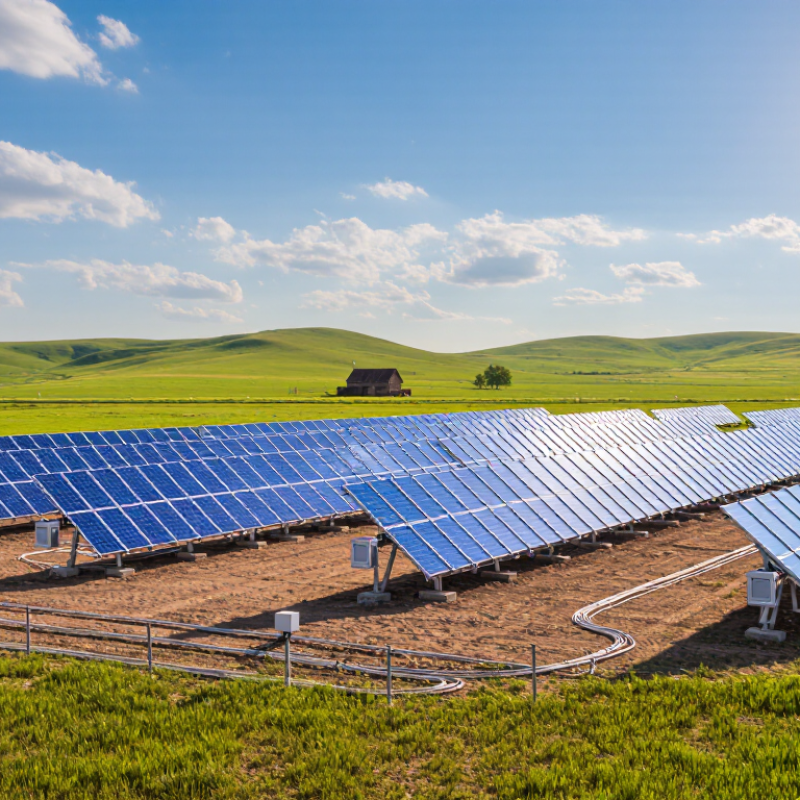
A dual-axis solar tracker is a mounting system that moves photovoltaic panels along two directions. One axis turns the array from east to west as the sun crosses the sky. The other adjusts its tilt to follow seasonal changes in the sun’s height. This differs from a fixed rack, which holds panels at one angle all year. That matters. The tracker can keep panel surfaces better aligned with direct sunlight, though the actual energy gain depends on location, weather, and shading. Its moving parts also mean more upkeep than a stationary installation.
The main components are a support frame, two drive mechanisms, a controller, and position feedback devices. The frame carries the panels and transfers their weight to a foundation. One drive rotates the structure; the other changes its tilt. The controller calculates or receives the sun’s position, then signals the drives when adjustment is needed. Some systems use light sensors, while others follow programmed solar-position data. Small details count. Bearings, fasteners, wiring, and weather-resistant enclosures all affect reliable operation. In practical inspections, loose connections or grit around moving joints can become noticeable before a major fault appears. The design is elegant, but not effortless; service access and local wind exposure deserve careful thought.
A dual-axis solar tracker is a mounting system that moves solar panels around two axes so they can follow the sun’s changing direction and height in the sky. It is most useful where direct sunlight is plentiful and the site has room for moving equipment.
| Component or Feature | What It Does | Practical Considerations |
|---|---|---|
| Azimuth axis | Rotates the panel assembly east to west to follow the sun’s compass direction. | Requires a clear movement path and a sturdy rotating connection. |
| Elevation axis | Tilts the panel assembly to adjust its angle as the sun’s height changes through the day and seasons. | Movement range and clearances depend on the design and site layout. |
| Support structure and foundation | Holds the panels and tracker mechanism in position and transfers loads into the ground or supporting surface. | Foundation design must account for soil conditions, panel weight, and local wind and snow loads. |
| Drive motors and gearing | Move the tracker along its axes, usually in small adjustments rather than continuous motion. | Moving parts need inspection; the system may use a safe stow position during severe weather. |
| Controller and sun-position inputs | Determine or calculate the desired panel orientation and command tracker movement. | Controls may use sun-position calculations, sensors, or a combination of methods. |
| Solar modules and electrical connections | Convert sunlight into electricity and carry power from the moving array to the electrical system. | Cable routing must allow movement without excessive bending, snagging, or abrasion. |
| Decision Factor | Indicative Information | How to Interpret It |
|---|---|---|
| Possible annual energy gain | In favorable, open-sky locations, dual-axis tracking is often estimated to produce roughly 25–40% more annual energy than a fixed-tilt array. | This is a broad planning range, not a guarantee. Local weather, latitude, shading, tracker settings, and system design can change the result. |
| Illustrative energy example | If a 1 kW fixed array produces 1,500 kWh per year, a 25–40% increase would equal approximately 375–600 additional kWh per year. | The 1,500 kWh baseline is an example only. Use a site-specific production estimate for a real comparison. |
| Upfront cost | Usually higher than a fixed-tilt installation because of the tracker structure, drives, controls, foundations, and added installation work. | Costs vary substantially by system size, location, wind requirements, ground conditions, and labor. Obtain project-specific quotations. |
| Maintenance and reliability | More moving parts generally mean more inspection and maintenance needs than a fixed mounting system. | Include service access, replacement parts, downtime, and maintenance costs in the lifetime comparison. |
| Site requirements | Works best with strong direct sunlight, minimal horizon shading, and adequate space for the panels to move. | Cloudy climates, tight sites, or nearby obstacles can reduce the value of tracking. |
| Break-even test | Compare the value of extra electricity over the system’s life with the added purchase, installation, maintenance, and financing costs. | Include electricity prices, self-consumption, export compensation, degradation, and expected service life in the calculation. |
| When it may be worth considering | Potentially attractive where land is available, direct sunlight is strong, the value of generated electricity is high, and maintenance can be managed. | For many residential sites, a fixed-tilt system may be simpler and more economical. Compare lifetime cost per kWh rather than energy gain alone. |
All production figures are indicative estimates. Actual output and financial return depend on the site, equipment, installation, electricity rates, and operating conditions. A site-specific energy assessment and cost comparison are needed before purchase.
It follows the sun across the day and through the seasons. This keeps panels closer to a direct angle. It can produce more energy than a fixed rack, but results vary by site.
Clear skies and strong direct sunlight tend to help. Cloud cover reduces the advantage because diffuse light comes from many directions. Dust and shade matter, too.
Compare annual estimates for a tracker and fixed-tilt system using local weather data. Include system details, maintenance, and downtime. A universal percentage can mislead.
No. Compare added energy value with equipment, installation, and operating costs. Local electricity prices and sunny peak hours affect the result. The spreadsheet may look better than the field.
Budget for the tracker, a stronger foundation, electrical connections, and extra labor. Rocky soil, steep ground, or limited access can raise costs. Ask for a site-specific estimate.
Motors, bearings, sensors, and moving joints need periodic inspection. Dust or debris can interfere with movement. Keep clear access around the array. Repairs can add up.
Strong winds, heavy snow, nearby shade, or frequent cloud cover can limit its benefits. Difficult terrain can also complicate installation. A fixed system has fewer moving parts.
Ask about inspection schedules, replacement parts, and performance in a similar climate. Check how often the tracker moves and how downtime is estimated. I would still question precise payback promises.
A dual-axis solar tracker is a mounting system that moves solar panels in two directions, allowing them to adjust both their tilt and orientation. Its main components typically include a support structure, motors or actuators, sensors, and a controller. By responding to the sun’s changing position throughout the day and across seasons, the tracker can keep panels better aligned with incoming sunlight than a fixed mount.
The added movement can increase energy production, but the actual gain depends on location, weather, shading, system design, and how consistently the tracker operates. Dual-axis systems also require a higher upfront investment, more space, and ongoing maintenance, and their moving parts may be less suitable for some sites. Is a dual-axis solar tracker worth the extra investment? It may be for locations with strong, consistent sunlight and high energy needs, but a fixed system may offer better value where simplicity, lower costs, or limited maintenance are priorities.

 Illumino Solar