What Are the Benefits of Solar Agrivoltaics for Farming?

Time:2026-05-09 Author:Liam
0%

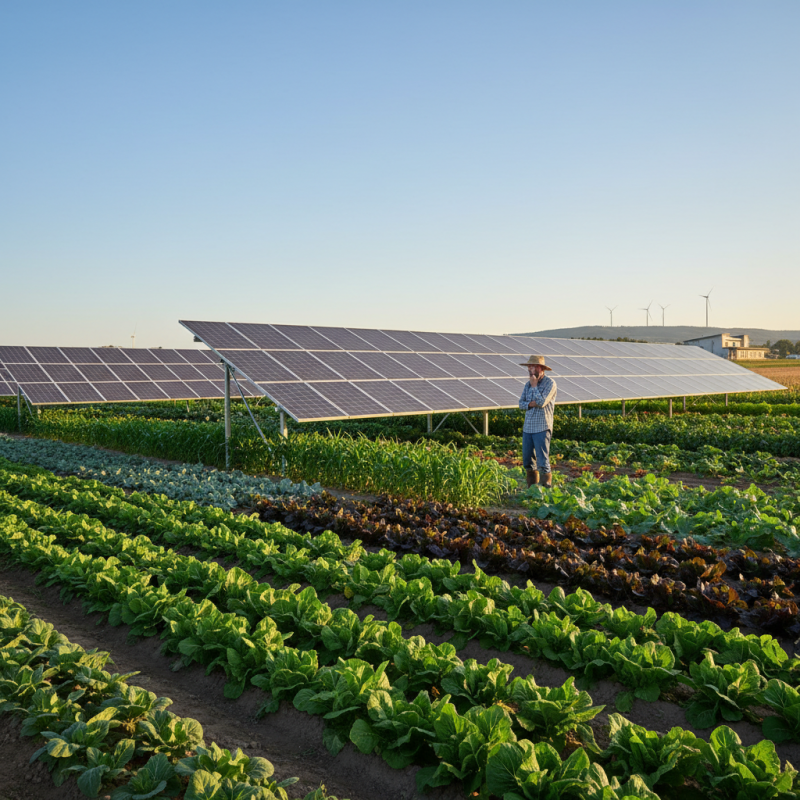
As agriculture faces numerous challenges, solar agrivoltaics emerge as a promising solution. Dr. Lisa Harrington, a leading expert in sustainable farming, states, "Solar agrivoltaics can transform how we approach both energy and food production." This statement highlights the crucial intersection of these two industries, emphasizing their potential for mutual benefit. What are the benefits of solar agrivoltaics in farming?

Implementing solar panels on agricultural land reduces the need for fossil fuels. Farmers can generate electricity while cultivating crops. This dual-use approach increases land efficiency. Additionally, the shade provided by solar panels can enhance crop resilience against extreme heat, reducing water demands. Moreover, solar agrivoltaics can lead to substantial financial savings. By generating their own energy, farmers can lower energy costs, improve their bottom line, and contribute to a greener future.

Despite the clear advantages, careful planning is necessary. Not all crops thrive in shaded conditions. Farmers must consider which crops will benefit from this innovative approach. The key lies in balancing energy production with agricultural productivity. As we weigh these factors, questions arise about long-term sustainability and adaptive strategies. Solar agrivoltaics presents an opportunity as well as a challenge for farmers aiming to embrace a more sustainable future.
What Are the Benefits of Solar Agrivoltaics for Farming?

Benefits of Combining Solar Energy with Agricultural Practices

Agrivoltaics combines solar energy production with agricultural practices. This innovative approach offers numerous benefits for farmers. According to a study by the National Renewable Energy Laboratory, implementing agrivoltaics can boost land productivity by up to 60%. This is significant in regions facing land scarcity. The dual use of land helps to optimize space while supporting sustainable energy.

Crop yields can also improve. Research shows that crops grown under solar panels may experience better moisture retention and reduced stress from direct sunlight. This can lead to enhanced growth and higher quality food products. An analysis by the International Renewable Energy Agency suggests that integrating solar energy can lead to a 30% increase in crop yield in certain cases.

Farmers often face high operational costs. By generating their own solar energy, they can lower these expenses. A report from the U.S. Department of Agriculture indicates that farmers can save up to 50% on energy costs with solar installations. While challenges exist, such as initial investment and panel maintenance, the long-term economic benefits make agrivoltaics a viable option. It encourages a shift towards sustainable practices that align with ecological goals.

What Are the Benefits of Solar Agrivoltaics for Farming?

Benefit Description Impact on Farming Environmental Impact
Increased Land Use Efficiency Combining solar panels with agriculture uses the same land for dual purposes. Maximizes output per acre, allowing for more crops or products. Reduces the need to convert more land for agriculture, preserving natural habitats.
Reduced Water Usage Shaded crops may require less water due to reduced evaporation rates. Improves crop yield with less water, which is crucial in arid regions. Conserves water resources and contributes to sustainable agriculture.
Climate Resilience Solar panels provide shade, thus protecting crops from extreme weather. Enhances crop resilience against climate change impacts. Promotes adaptation strategies for sustainable farming.
Energy Independence Farmers can generate their own electricity, reducing reliance on grid power. Decreases operation costs and protects against energy price fluctuations. Reduces carbon footprint associated with energy use in agriculture.
Revenue Stream Selling excess energy back to the grid can create additional income for farmers. Diversifies income sources for agricultural operations. Encourages sustainable farming practices that can provide economic benefits.

Improved Land Use Efficiency through Agrivoltaics

Agrivoltaics combines agriculture and solar energy production. This innovative approach allows for better land use efficiency. By placing solar panels over crops, farmers can generate electricity while still growing food. This dual use of land helps maximize productivity.

The efficiency of this method is striking. Crops can benefit from the shade provided by solar panels. This protection can reduce heat stress on plants, allowing for better growth in hot climates. However, the balance is delicate. Too much shade could hinder photosynthesis, impacting yields. Farmers must choose crops wisely.

Beyond land efficiency, agrivoltaics can enhance sustainability. It encourages the use of renewable energy in farming. Yet, not all regions are suitable for this technology. Soil quality, local climate, and economic factors play a significant role. Continuous research is essential to refine this practice and address potential challenges.

Benefits of Solar Agrivoltaics for Farming

Solar agrivoltaics can enhance land use efficiency by integrating agricultural production with solar energy generation. The following chart illustrates the increase in yields and energy production in various farming systems utilizing agrivoltaics.

Enhanced Crop Yields and Solar Panel Synergy

Agrivoltaics combines solar energy production with agricultural benefits. Studies indicate that implementing solar panels on farmland can lead to enhanced crop yields. A report by the National Renewable Energy Laboratory (NREL) suggests that shaded crops can have a 20% increase in productivity, particularly in areas with high temperatures. This approach protects plants from extreme heat while still allowing them to benefit from sunlight.

The synergy between solar panels and farming is remarkable. For instance, crops like spinach and lettuce thrive under partial shade. A study published in "Nature Sustainability" shows that agrivoltaic systems can reduce water usage by approximately 30%. This is crucial in regions facing drought, as conserving water resources becomes imperative. Additionally, farmers can diversify their income sources by generating solar energy while growing crops.

However, it’s not without challenges. Land use must be carefully planned. Not every crop can adapt to these new conditions. Research is ongoing to optimize crop selection and layout for maximum yield. Some farmers express concerns about the initial investment costs and the technology's maintenance. Balancing these factors requires thoughtful consideration and collaboration among farmers and energy experts.

Reduction of Water Usage in Solar Agrivoltaics Systems

Agrivoltaics combines solar energy with agricultural practices, creating a dual-use approach. One of its notable benefits is the reduction of water usage. Research by the National Renewable Energy Laboratory (NREL) indicates that agrivoltaic systems can reduce water requirements for certain crops by up to 50%. This efficiency stems from the shade provided by solar panels, which decreases soil evaporation and helps retain moisture.


For farmers, using solar panels to support crops can be an intelligent strategy in areas facing water scarcity. A report from the U.S. Department of Agriculture (USDA) emphasizes that with climate change, agricultural water availability is diminishing. By installing agrivoltaic systems, farmers can effectively extend the lifespan of their water resources. In addition, a study published in "Renewable Agriculture and Food Systems" highlights that integrating solar energy with farming practices can improve crop resilience during drought conditions.


However, the implementation of agrivoltaics isn't without challenges. The initial costs can be overwhelming and may discourage some farmers. Additionally, the potential impacts on crop yield need further exploration in various climates and soil types. Ongoing research is necessary to fully understand the long-term benefits and trade-offs of this innovative system for sustainable farming.

Economic Advantages for Farmers Adopting Agrivoltaic Solutions

Agrivoltaics presents a unique opportunity for farmers, merging solar energy production with traditional farming. Recent reports suggest that adopting agrivoltaic systems can increase farm revenue by up to 50%. This dual-use approach allows for the simultaneous generation of crops and electricity. Farmers benefit from reduced energy costs and an additional income stream.

Moreover, dual cropping can enhance land efficiency. By using land for both agriculture and solar energy, farmers conserve resources. Studies indicate that agrivoltaic systems can improve crop yield by 10% to 20% due to the shade provided by solar panels. This creates a cooler microclimate, reducing moisture loss. However, some farmers worry about the initial installation costs and maintenance challenges.

Incorporating renewable energy can also increase a farm's resilience against market fluctuations. The U.S. Department of Agriculture emphasizes that renewable energy sources can stabilize farm income. Yet, understanding the financial and technical implications of such systems is crucial. Farmers need to weigh the benefits against the potential challenges.

FAQS

: What is agrivoltaics?

: Agrivoltaics combines solar energy production with agricultural practices to optimize land use.

How can agrivoltaics improve crop yields?

Research shows that crops under solar panels can retain moisture better, leading to improved growth and food quality.

What are the economic benefits of adopting agrivoltaics?

Farmers can potentially increase revenue by up to 50% and lower energy costs by generating their own solar energy.

How much can crop yields increase with agrivoltaics?

Crop yields may improve by 10% to 30% due to the shade and cooler microclimate created by solar panels.

What challenges do farmers face with agrivoltaic systems?

Initial installation costs and maintenance issues can be concerns for farmers considering agrivoltaics.

Why is agrivoltaics beneficial in regions with land scarcity?

It helps optimize space by allowing the simultaneous production of crops and energy, boosting productivity significantly.

How can agrivoltaics impact a farm's resilience?

Renewable energy can stabilize income and protect against market fluctuations, making farms more resilient in the long run.

Is the initial investment in agrivoltaics worth it?

While challenging, the long-term economic benefits can outweigh the initial costs for many farmers.

How does agrivoltaics promote sustainability?

It encourages eco-friendly practices by integrating energy production with agriculture, aligning with sustainable goals.

What should farmers consider before implementing agrivoltaics?

They need to assess the technical and financial implications, weighing benefits against potential challenges.

Conclusion

Solar agrivoltaics presents a transformative approach to farming by integrating solar energy production with agricultural practices. What are the benefits of solar agrivoltaics in farming? Firstly, it enhances land use efficiency, allowing farmers to maximize productivity by generating renewable energy alongside crops. This synergy not only boosts crop yields but also creates microclimates that can protect plants from extreme weather conditions.

Additionally, solar agrivoltaics systems contribute to a significant reduction in water usage, as the shade from solar panels can lower evaporation rates in the soil. Economically, farmers adopting these agrivoltaic solutions may benefit from lower energy costs and potential income from selling excess energy. Overall, solar agrivoltaics fosters sustainable farming practices while promoting economic resilience for farmers.

Liam

Liam

Liam is a dedicated marketing professional with a profound expertise in the industry, where he excels at highlighting the unique advantages of our core products. With a keen understanding of market trends and consumer needs, Liam frequently updates our company’s professional blog, providing......