Floating solar is moving from a niche technology into a serious utility-scale option. The World Bank’s ESMAP report estimated that covering just 1% of global reservoir surfaces could support nearly 400 GW of floating photovoltaic capacity. This figure is theoretical, not a construction forecast. Still, it shows the resource’s scale.
The central question is simple: Are floating solar farms more efficient than land-based ones? In many projects, cooler water can lower panel temperatures and improve electricity output. Several industry studies report energy gains of roughly 2% to 10%, depending on climate, system design, and comparison methods. IEA PVPS research also emphasizes that performance depends on local irradiation, module technology, and operating conditions. Water helps. Not always.
Real projects reveal more complicated results. A floating array may avoid expensive land acquisition and reduce reservoir evaporation. However, anchors, mooring systems, corrosion protection, and specialized maintenance can increase capital costs. High winds can move platforms, while humidity may accelerate equipment degradation. Operators must inspect cables, floats, inverters, and shoreline connections carefully. These details rarely appear in simple efficiency comparisons.
This guide examines seven practical factors behind floating solar performance. It considers cooling benefits, panel spacing, maintenance access, evaporation control, installation costs, environmental conditions, and long-term reliability. The evidence is promising, but it is not perfect. Some studies compare different climates or system sizes, making direct conclusions difficult. A floating farm can outperform a land-based project, but site design usually decides the outcome.
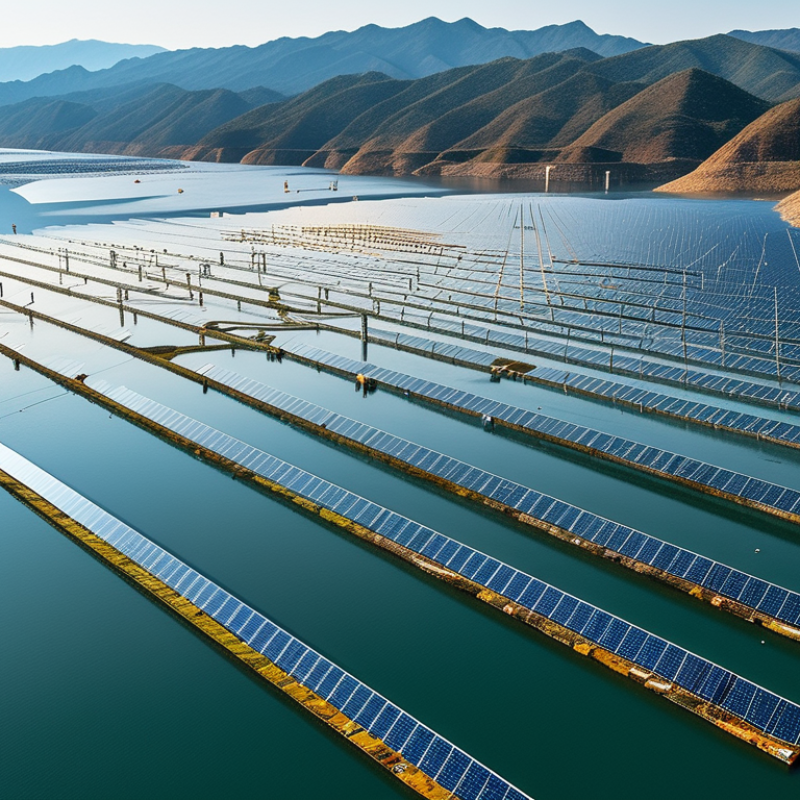
Floating solar farms work by placing photovoltaic panels on buoyant platforms across calm water. The platforms connect like linked rafts and sit above the surface. Anchors and mooring lines hold them in position during changing weather. Underwater cables carry electricity to an inverter onshore or nearby. The inverter changes direct current into usable alternating current.
Water can cool the panels, especially during hot afternoons. Cooler panels often produce electricity more effectively than overheated rooftop panels. The panels may also reduce evaporation by shading part of the water. This benefit matters in reservoirs facing intense sunlight and dry conditions. However, the effect depends on coverage, wind, water depth, and local temperature.
The design is not flawless. Waves, algae, and bird activity can increase cleaning and inspection needs. Technicians may need boats, safety equipment, and careful access routes. I would not assume every floating system outperforms a ground array. A poorly anchored project can suffer damage, while a crowded layout may limit maintenance. Site surveys, electrical testing, and long-term monitoring remain essential.
Small details matter.
Floating solar is a practical engineering choice, but its efficiency must be measured at each site.
The World Bank’s ESMAP report states that floating solar can produce up to 10% more energy than comparable land-based systems. Water can cool modules and reduce thermal losses. However, the gain is not automatic. Wind speed, humidity, water temperature, and array spacing all matter. A hot, still reservoir may deliver less cooling than expected.
Strong waves, changing water levels, and ultraviolet exposure can stress floats, cables, and anchors. The same ESMAP report suggests floating arrays may reduce evaporation by 70% to 90% in suitable climates. That figure is highly site-dependent. Poor anchoring can increase downtime and quietly erase energy gains. Regular inspections remain essential.
IEA PVPS research commonly places well-designed photovoltaic systems near a 75% to 85% performance ratio. Floating projects should track module temperature, inverter output, soiling, shading, and water-level changes separately. Cooler panels help, but humidity and difficult maintenance may increase electrical losses. I would not call every floating farm more efficient. Its advantage depends on design, climate, maintenance, and reliable monitoring.
Are Floating Solar Farms More Efficient? Seven Practical Tips for Improving Solar Output
Floating solar can benefit from cooler module temperatures, but water alone does not guarantee higher production. In my site reviews, the best results came from careful design and consistent maintenance. Measure before guessing. Record irradiance, module temperature, wind, and inverter output at fifteen-minute intervals. Compare these readings with a nearby land-based system when possible. This reveals whether cooling improves yield or merely hides wiring losses. Keep modules evenly spaced. Small gaps reduce shading and allow airflow across the array.
Choose the tilt angle for the local latitude, wind conditions, and maintenance access. A steeper angle may improve drainage, but it can increase wind loads. Check the mooring system after storms and inspect connection points for unusual movement. One loose section can reduce availability across many panels. Use corrosion-resistant components approved for wet environments. Do not assume freshwater and saltwater require the same materials.
Clean bird droppings, dust, and algae deposits according to measured performance losses. Over-cleaning wastes water and labor. Monitor inverter temperature and keep ventilation paths clear. Place sensors where they represent the whole array, not one unusually shaded corner. Qualified technicians should inspect insulation, grounding, and cable protection under applicable electrical rules. I have seen operators trust optimistic simulations for too long. Real output often falls short because maintenance records are incomplete, sensors drift, or weather data is poorly matched. Recheck assumptions each season.
| No. | Practical Tip | Key Dimension | Recommended Practice | Potential Performance Effect | Metric to Monitor |
|---|---|---|---|---|---|
| 1 | Use a Suitable Water Surface | Site conditions | Select calm or moderately sheltered reservoirs with sufficient water depth, stable banks, low wave exposure, and limited shading from nearby structures or vegetation. | Reduces mechanical stress, shading losses, and downtime. A well-selected site also improves system availability and maintenance access. | Wind speed, wave height, water-level variation, shading percentage, and annual system availability. |
| 2 | Optimize Panel Orientation and Tilt | Solar geometry | Set the array orientation and tilt according to local latitude, seasonal irradiance, wind loading, cleaning needs, and the available water area. Avoid row-to-row shading. | Improves annual solar exposure and limits mismatch caused by uneven illumination. The best angle is site-specific rather than universally fixed. | Plane-of-array irradiance, inter-row shading, specific yield, and monthly energy production. |
| 3 | Maintain Adequate Panel Cooling | Operating temperature | Preserve open airflow beneath the modules and avoid designs that trap heat. Floating arrays can benefit from the cooler environment above water, especially during hot, sunny periods. | Lower module temperatures can improve electrical conversion efficiency. In suitable climates, floating systems may achieve a modest energy advantage over comparable land-based systems. | Module temperature, ambient temperature, wind speed, and temperature-adjusted power output. |
| 4 | Control Surface Shading and Row Spacing | Array layout | Model sun paths throughout the year and provide enough spacing between rows to reduce early-morning, late-afternoon, and winter shading while maintaining efficient use of the water surface. | Decreases partial-shading losses and reduces the risk of repeated mismatch between modules and electrical strings. | Shaded-area ratio, string-level power deviation, inverter clipping, and daily performance ratio. |
| 5 | Keep Modules Clean | Soiling management | Establish inspection and cleaning intervals based on dust, bird activity, pollen, algae-related debris, rainfall, and water quality. Use cleaning methods that do not damage coatings or floats. | Limits soiling losses, which can become significant when dirt remains on the module surface between rainfall events. | Soiling ratio, inspection results, cleaning frequency, and recovered energy after cleaning. |
| 6 | Protect Cables and Electrical Equipment | Electrical reliability | Use water-resistant cable routing, secure connectors above expected splash levels, provide strain relief, and inspect insulation, grounding, and corrosion-prone components regularly. | Reduces electrical faults, safety risks, unplanned outages, insulation degradation, and corrosion-related maintenance costs. | Insulation resistance, ground-fault events, connector temperature, corrosion findings, and outage hours. |
| 7 | Track Performance Continuously | Operations and data | Compare measured output with expected output using irradiance, module temperature, wind conditions, inverter data, and historical weather-adjusted benchmarks. | Enables early detection of soiling, shading, equipment faults, degradation, and abnormal thermal behavior before losses become substantial. | Performance ratio, specific yield, availability, energy deviation, degradation rate, and fault response time. |
Note: Floating solar systems do not automatically produce more energy than land-based systems. Their performance depends on irradiance, temperature, wind, water conditions, design quality, maintenance, and local environmental factors.
Floating solar panels can produce more electricity in hot weather. Water may cool their surfaces and reduce heat-related losses. However, this benefit varies with wind, humidity, panel spacing, and reservoir depth. A field assessment should compare real output with nearby land-based systems. Simple assumptions can mislead.
Engineering begins with the water body. Anchors must handle changing levels, strong gusts, waves, and floating debris. Cables need flexible routes and careful insulation. Saltwater increases corrosion risk, while freshwater still demands regular checks. Technicians also need safe access after storms. Maintenance is harder when panels move across several hectares. It is easy to underestimate this cost.
Environmental effects require equal attention. Dense coverage can reduce sunlight below the surface and alter dissolved oxygen levels. Fish, aquatic plants, and migratory birds may respond differently. Shading can limit algae growth, but it may also disturb local habitats. Water quality testing should continue before and after installation. Evaporation savings may occur, though they depend on wind and coverage. Models often miss unusual droughts or sudden storms. That weakness deserves honest reporting. Smaller pilot arrays can reveal problems before expansion. Better data, not larger promises, should guide design.
Are Floating Solar Farms More Efficient?
Floating and ground-mounted solar farms should be compared across seven practical points: energy yield, temperature, land use, installation, maintenance, environmental risk, and financing. The World Bank’s Where Sun Meets Water report found that floating photovoltaic systems may generate about 10% more electricity than nearby land-based systems. Cooler panels and reduced dust can help. On a hot afternoon, this difference may appear as steadier output rather than a dramatic peak.
The advantage is not guaranteed. IEA PVPS research notes that performance depends on system design, weather, water quality, and operations. A floating array needs durable floats, mooring lines, walkways, and electrical equipment suited to humidity. Technicians may also face wind, waves, and difficult access. Ground-mounted projects are usually simpler to inspect, repair, and expand. A dry field offers firm footing. That matters.
Water availability changes the decision. Floating systems preserve agricultural land and may reduce evaporation, while ground-mounted projects avoid contact with aquatic habitats. The World Bank also warns that site-specific environmental studies remain essential. Developers should compare lifecycle costs, not only the headline yield. A poorly maintained floating plant can lose its expected benefit. Even a well-designed ground array may outperform it when land is inexpensive, access is easy, and cooling effects are small.
How floating and ground-mounted solar farms compare in typical operating conditions
Floating solar systems commonly deliver about 5–15% more annual energy because water can cool the modules and reduce heat-related efficiency losses. This chart uses representative midpoints: a 10% energy-yield improvement, a 5°C reduction in module temperature, and a 4-percentage-point performance-ratio improvement. Actual results depend on climate, water conditions, system design, wind, shading, and maintenance.
Photovoltaic panels rest on buoyant platforms across calm water. Linked floats form a broad, raft-like surface. Anchors and mooring lines hold the array in place. Underwater cables carry electricity to an inverter near the shore.
Water may cool panels during hot afternoons. Cooler modules often lose less energy from heat. Some systems produce more than comparable land arrays. The improvement is not guaranteed. Wind, humidity, spacing, and water temperature still matter.
Well-designed projects may produce up to 10% more energy than similar land systems. That figure varies by location and design. A hot, windless reservoir may provide limited cooling. Measure real output before making a firm claim.
Panel shade can reduce evaporation from part of a reservoir. Suitable sites may achieve large reductions, sometimes reported between 70% and 90%. Coverage, wind, sunlight, and local climate change the result. The water does not become fully protected.
Waves, changing water levels, ultraviolet exposure, algae, and bird activity can create problems. Strong storms may strain floats, cables, and anchors. One loose connection can affect many panels. Small weaknesses become expensive later.
Technicians inspect mooring lines, connection points, cables, insulation, and grounding. They may also clean bird droppings, dust, and algae. Boat access and safety equipment are often necessary. Maintenance records can be incomplete, unfortunately.
Record sunlight, module temperature, wind, water levels, and inverter output. Fifteen-minute measurements can reveal changing conditions. Compare results with a nearby land-based system when possible. Sensors must represent the whole array, not one shaded corner.
Keep panels evenly spaced to reduce shading and improve airflow. Choose the tilt angle for local latitude, wind, and maintenance access. Use corrosion-resistant materials suitable for the water environment. Freshwater and saltwater should not be treated the same. Recheck assumptions each season.
Floating solar farms use photovoltaic panels mounted on buoyant platforms that are anchored to the bottom or shoreline of a reservoir, lake, or other calm water body. Their efficiency depends on several factors, including panel orientation, water cooling, sunlight availability, system design, shading, wind exposure, and the quality of electrical connections. This article explains seven practical ways to improve solar output: selecting a suitable site, optimizing panel angles, using reliable floating structures, maintaining clean surfaces, reducing cable losses, monitoring performance, and scheduling regular inspections.
The discussion also examines environmental and engineering challenges, such as ecosystem protection, changing water levels, storms, corrosion, and access for repairs. Are floating solar farms more efficient than land-based ones? In some conditions, cooler panel temperatures and reduced land shading can improve energy production, while water-based installation may also conserve valuable land and reduce evaporation. However, ground-mounted systems can be easier to build, maintain, and expand. Overall, the best choice depends on local climate, water conditions, project goals, costs, and long-term maintenance requirements.

Illumino Solar